Dead Battery vs Bad Alternator: How to Tell, and When You Need a Boost or a Tow
Car won't start? How to tell a dead battery from a bad alternator, simple voltage checks, why winter makes it worse, and when a boost or a tow makes sense.
Dead Battery or Bad Alternator? The Quick Answer
If your car starts after a boost and keeps starting normally over the next few days, the battery is the likely cause. If it starts after a boost and then dies again within minutes, or it dies while you're driving, suspect the alternator or another part of the charging system.
The battery stores the power that starts the engine. The alternator recharges the battery and runs the car's electrics once the engine is going. When either one fails, the car can look the same from the driver's seat, so getting it wrong means buying a battery you didn't need, or the other way around.
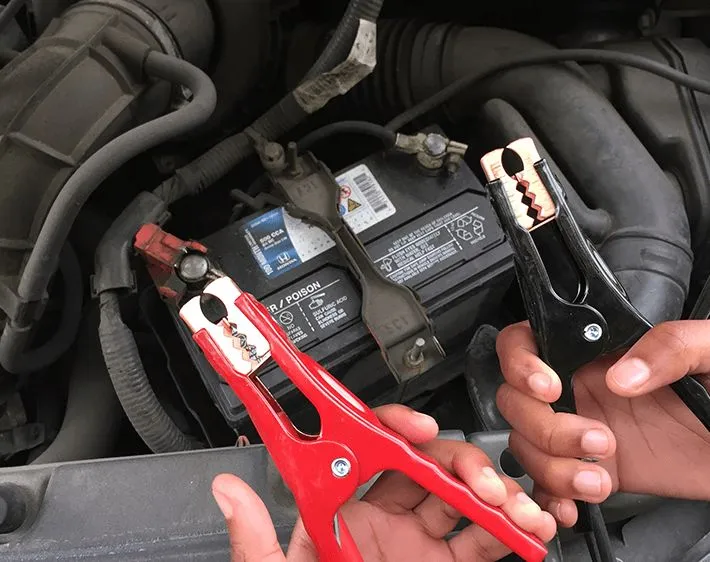
Signs of a Dead Battery
- The engine cranks slowly or just clicks, especially after the car sat overnight
- Lights and the dash are dim before you even try to start it
- The battery is three to five years old or more
- The car starts after a boost and then keeps running and restarting normally
- It happens on the first cold morning of the season
Signs of a Bad Alternator
- The car starts, then dies while you're driving
- Lights flicker or dim as you drive, the radio cuts out, or warning lights appear
- The battery warning light comes on while driving, not just for a second at start-up
- A burning smell or a whining noise from the front of the engine
- The car starts after a boost but dies again within minutes
Check It Yourself With a Multimeter
A cheap multimeter set to DC volts gives you a good clue. Put the red probe on the battery's positive terminal and the black probe on the negative.
- Engine off, car rested a few hours: about 12.6 volts means a full battery. Around 12.4 is about three-quarters charged, around 12.2 is about half, and below 12.0 the battery is flat.
- Engine running: most cars read roughly 13.5 to 14.7 volts, which means the alternator is charging. If the reading stays near the engine-off number, or drops below about 13, the charging system is likely the problem.
These are general guides, not a full test. A battery can show a healthy voltage and still fail under load, which is why a proper battery and charging check is worth doing.
Why Batteries Fail More in an Ontario Winter
Cold slows the chemical reaction inside a battery, so it delivers less power, right when a cold engine needs more of it to turn over. A battery that was already weak often gives out on the first really cold morning. Short trips make it worse: the alternator doesn't run long enough to put back what starting the car took out. Summer heat matters too, because it wears batteries out faster, and the damage often shows up the following winter.
The Chicken-and-Egg Problem
A failing alternator can wear out a healthy battery over a few weeks, and a deeply drained battery can make a good alternator look faulty. If you've had repeated battery problems in the past year, have the charging system tested before you replace the battery again.
Other Problems That Look Like a Dead Battery
- Loose or corroded terminals: white or green crust on the battery posts can stop power getting through, even from a good battery
- A drain while parked: an interior light, a phone charger or a faulty module can flatten a battery overnight
- A bad starter: you hear a single click and the lights stay bright, but the engine doesn't turn
- No fuel or spark: if the engine cranks at normal speed but won't fire, the battery probably isn't the problem, and a boost won't help
Boost or Tow?
- Car was fine yesterday and won't start today: a battery boost is usually the first step
- Car won't start soon after a new battery: likely the charging system, so a tow to a mechanic makes sense
- Car died while driving: likely the alternator or another electrical fault, so call for a tow
- Engine cranks normally but won't start: not a battery problem; a tow to a mechanic is usually next
When we boost a car, we use professional booster packs with built-in protection instead of cable-to-cable jumps from another running car. After the boost, we run a basic battery and charging-system check, so you know whether the battery, the alternator or something else is the likely problem.
Battery boosts start at $50 in Brampton; outside Brampton the price depends on distance. Prices are before HST. See all our prices on the tow cost calculator. Nothing is final until we confirm the price with you by phone.
Safety First
Never try to boost a battery that is cracked, leaking, bulging or frozen. Don't attempt it yourself: tell dispatch what you see. If you do boost a car yourself, follow the order in your owner's manual and keep sparks and flames away from the battery.
Common Questions
Can a bad alternator kill a new battery?
Yes. If the alternator isn't charging properly, even a new battery will run down. That's why a car that keeps needing boosts after a new battery usually needs its charging system checked.
How long does a car battery last?
Often three to five years. Heat, cold, short trips and electrical drains can all shorten that.
Can you boost a hybrid or an electric car?
Hybrids and EVs have a small 12-volt battery that runs their electronics, and it can go flat like any other. We boost that 12-volt battery.
How much is a battery boost in Brampton?
Boosts start at $50 in Brampton. Prices are before HST. Outside Brampton, the price depends on how far we have to drive, and we confirm it with you before we dispatch.
Need a battery boost in Brampton, Mississauga or the GTA? Fast 24/7 dispatch — call 647-673-9755.
Need a Battery Boost?
Fast 24/7 dispatch. Response time varies by location, traffic, weather and current demand.
Battery boost and jump start →