Does Car Insurance Cover Towing in Ontario? (And Do You Have to Use Their Shop?)
Does insurance cover towing after an accident in Ontario? What's covered, what isn't, whether a tow raises your premium, and the choices that stay yours.
Reviewed November 2026 against current Ontario government and FSRA guidance.
Does Insurance Cover Towing After an Accident?
Not automatically. In Ontario, damage to your car after a collision is claimed through your own insurer — under Direct Compensation – Property Damage (DCPD) for the share you're not at fault, or Collision coverage if you carry it. Towing isn't on FSRA's list of what DCPD pays for, so ask your adjuster, in writing, whether the tow and any storage are covered.
- If you're 100% at fault, FSRA says DCPD won't cover your repairs; optional Collision coverage can, minus your deductible.
- What DCPD lists: FSRA's list is repairs or replacement of your vehicle, a temporary rental vehicle and damaged contents. Towing and storage aren't named, so get the answer from your adjuster before you assume.
- Moving the car twice can cost you. If your vehicle is moved from one shop to another, the first shop may still bill you for towing, storage and administrative fees — and your insurer may not cover them.
See FSRA: after an accident — understanding the claims process and the archived tow truck and storage scam tips first published by FSCO, FSRA's predecessor.
Does Insurance Cover Towing for a Breakdown?
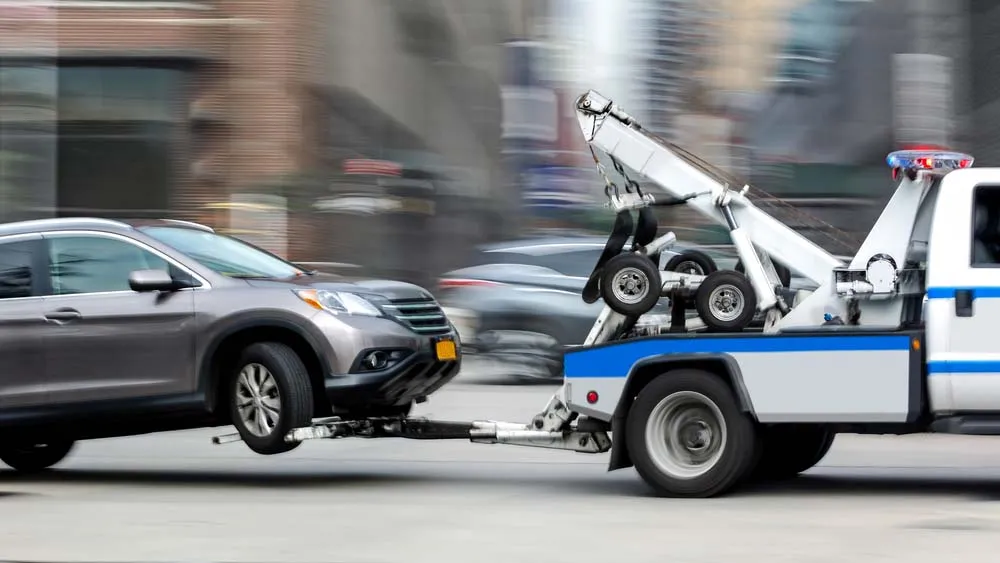
Usually not. A mechanical breakdown isn't a collision claim. Breakdown towing is typically covered only if you have a roadside assistance add-on from your insurer or a separate roadside membership. Otherwise you pay the tow operator directly — and you're still entitled to its maximum rate schedule before the tow and an itemized invoice before you pay.
Will Getting Towed Raise My Insurance?
Paying for a tow on its own isn't an insurance claim. What can change your premium is an accident claim in which you're found at fault:
- Being found at fault goes on your record. FSRA's current guidance: fault is assessed from 0 to 100 percent, any at-fault finding is recorded on your insurance record, and if you're found 50 percent or more at fault, there's a good chance your premium will go up at your next renewal. How a smaller share of fault affects your rate depends on your insurer's rating rules — ask your insurer or broker. See FSRA: after an accident — understanding the claims process.
- Minor accidents: an insurer can't use a minor at-fault accident to set your premium if no one was injured, no insurer paid anything, and the damage to each vehicle and any other property was $5,000 or less and paid by the at-fault driver. It applies to one minor accident every three years. The limit was $2,000 until O. Reg. 56/25 raised it, so ask your insurer which limit applies to your accident date.
Car Towed and You Can't Pay — Do You Still Need Insurance?
Ontario's Compulsory Automobile Insurance Act requires a vehicle to be insured when it's operated on a highway. Whether to keep, reduce or pause coverage while a car sits in a storage yard is a decision to make with your insurer or broker, because:
- Comprehensive coverage is what protects a parked or stored car against theft, fire and vandalism
- A car loan or lease may require you to keep the vehicle insured — check your agreement
- The car has to be insured again before anyone drives it
Don't let the car sit while you decide. Daily storage fees keep adding up, and FSRA warns that the business holding your vehicle may be able to sell it to recover unpaid fees under Ontario's Repair and Storage Liens Act. Before you pay, you're entitled to an itemized invoice, and you can pay by credit card, debit card or cash — see Ontario: know your rights when getting a tow. If the tow followed a collision, call your insurer now and ask whether towing and storage are part of the claim.
Who insures the car while it's being towed?
Certified tow operators must carry their own insurance. Ontario requires at least $100,000 of coverage for damage to a vehicle while it's in the operator's care, custody or control. See O. Reg. 167/23 under the TSSEA.
Four Separate Questions After a Collision
These often get mixed together. They are governed by different rules.
1. Who tows the car — towing rights
Ontario's Towing and Storage Safety and Enforcement Act, 2021 (TSSEA) lets you choose your tow company and destination. There are two exceptions: highway sections inside the province's Tow Zone Program, and tows ordered by police or another authorized official — for example, when a car is blocking traffic or parked illegally. See Ontario: know your rights when getting a tow.
2. Where it's repaired — repair-shop choice
FSRA, Ontario's insurance regulator, states that as long as your insurance company approves the estimate, you may have your vehicle repaired at the shop of your choice. Your insurer may suggest a preferred shop; that is a suggestion. See FSRA's claims booklet and its claims process page.
Insurer-preferred shops are not bad shops. If you choose a different one, ask how the estimate will be approved and whether the shop deals with your insurer directly.
3. Whether you get a rental — rental coverage
A rental or replacement vehicle after a collision is usually optional coverage (often called transportation replacement coverage, or OPCF 20), with a daily and total limit set in your policy. If you're not at fault, your policy's Direct Compensation – Property Damage (DCPD) coverage may also be relevant — check whether your policy includes it. Who arranges the rental is your choice; what the insurer will pay for depends on your coverage. See getting a rental car after an accident for the questions to ask first.
4. What you owe — your deductible and limits
Your deductible, coverage limits and any amounts the insurer declines are set by your policy and the claim decision. Ask your insurer before you authorize work. If a shop offers to cover your deductible, read what to ask before you agree.
Using Your Coverage Without Giving Up Control
1. Make sure everyone is safe and report the collision if required
2. Call your insurer to open the claim and ask what your policy covers
3. Arrange the tow with the company you choose (outside a tow zone)
4. Tell your insurer which repair shop you've chosen and let them approve the estimate
Along with accident towing, Pixel Towing offers collision repair and rental vehicles through businesses we have an interest in. We disclose that before any referral, and you are free to choose any other shop or rental company.
This article is general information, not insurance advice.
Need a tow after a collision in Brampton or the GTA? Call 647-673-9755.
Need an Accident Tow in Brampton or the GTA?
Fast 24/7 dispatch. Response time varies by location, traffic, weather and current demand.
Accident towing in Brampton →